Kitchen floor cleaning in Chicago

Commercial Kitchen Floor Cleaning

Keep BOH floors safer and inspection-ready with scheduled deep cleaning that targets grease, grout, and slip-risk buildup without disrupting service.

✓Tile and grout cleaning ✓After-hours scheduling ✓Written cleaning scopes
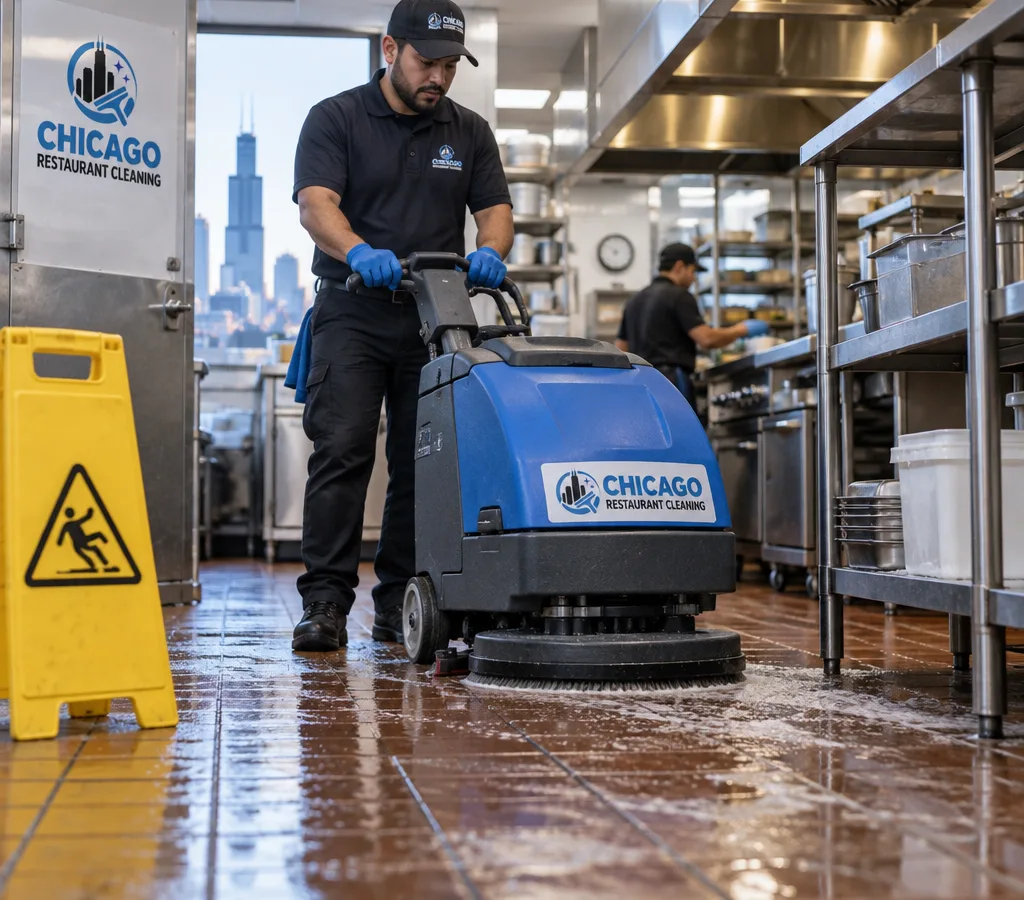
Early-morning commercial kitchen floor cleaning with an auto-scrubber, wet floor signage, and stainless prep tables
Restaurant floor care

Restaurant floor cleaning that holds up to real kitchen traffic

Busy Chicago kitchens build up more than visible soil. Cooking oils aerosolize, settle into textured tile, and bond to grout lines. Add constant foot traffic, dish runs, and mop water that never fully rinses away, and the floor can stay slick even when it looks clean.

Chicago Restaurant Cleaning provides Commercial Kitchen Floor Cleaning for restaurants that need consistent results. We focus on the surfaces that drive slip risk and odor: quarry tile, ceramic tile, textured porcelain, epoxy-coated areas, and grout joints where grease and carbon settle. The goal is simple: a floor that feels cleaner underfoot, drains better, dries faster, and is easier for your staff to maintain between deep cleans.

We work out of 410 N Hermitage Ave, Suite 4 in Chicago and schedule around your service hours, deliveries, and prep so the work gets done without turning your kitchen into a construction zone. For operators coordinating multiple cleaning needs, our restaurant cleaning services in Chicago can be scoped so floors fit cleanly into the same schedule.

Request a Callback
Detailed floor-cleaning scope

What's included in Commercial Kitchen Floor Cleaning (tile, grout, and grease)

A proper kitchen floor reset takes more than a stronger chemical and a stiffer deck brush. Our Restaurant Floor Cleaning Services are built around three realities: grease is hydrophobic, grout is porous, and kitchens have edges and details that machines miss.

Typical scope for Commercial Floor Cleaning Chicago kitchens includes:

  • Pre-inspection of floor type, grout condition, and problem zones, including the cook line, dish pit, walk-in thresholds, mop sink area, and bar service entrances.
  • Targeted Restaurant Floor Degreasing with the right dwell time so oils release instead of smearing.
  • Agitation with commercial-grade brushes or pads matched to the surface texture, especially for quarry tile.
  • Hot-water rinse and recovery with equipment designed to pull slurry out of grout joints.
  • Detail work at coves, corners, toe-kicks, under reachable equipment edges, and around floor drains.
  • A drying plan that reduces re-tracking before you reopen.

Restaurant Tile Cleaning is most effective when it is paired with Restaurant Grout Cleaning. Grout lines act like a sponge for grease and can keep releasing odor and tackiness back onto the tile surface until they are flushed and extracted.

If your BOH has a mix of surfaces—tile in the cook line, epoxy near storage, or rubberized mats at dish—we note what should be cleaned, what should be replaced, and what should be adjusted in daily mop routines so your next deep clean lasts longer.

Request a Callback
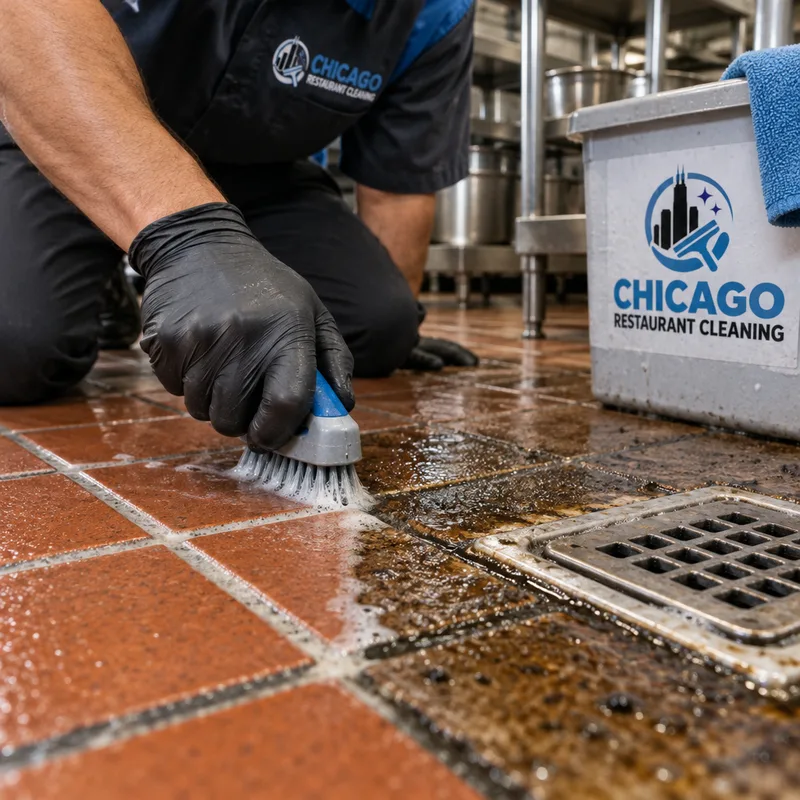
Quarry tile and grout being deep-degreased near a commercial kitchen floor drain
Operational priorities

What Chicago restaurants usually want from a floor-cleaning crew

Degreasing that doesn't just move the problem

Kitchen Floor Degreasing should break the bond and remove the residue, not spread it into a larger slick spot. We use controlled dwell time, agitation, and recovery so grease leaves the floor instead of getting redistributed.

Safer traction where slips actually happen

The highest-risk zones are usually the transitions: cook line to prep, prep to dish, and BOH to dining entry. We focus on those lanes and corners, and we manage drying so traffic can resume without skating across wet film.

Grout lines that rinse clear

Grout is where oils and carbon settle. Our Restaurant Grout Cleaning approach is designed to flush and extract the embedded soil so the floor stops feeling sticky a day after the clean.

Work that fits service reality

Many River North and West Loop kitchens run late and start early. We plan the sequence so key lines and pass-through lanes open first, then we finish lower-traffic areas while you set up.

Consistency across multiple locations

If you manage more than one kitchen, you need the same scope each time. We document the surface types, problem areas, and preferred schedule so results don't vary shift to shift or store to store.

Our floor-cleaning process

Our Restaurant Floor Cleaning Chicago process

  1. Step 1 of 5

    Walk-through and scope confirmation

    We identify the floor types, heavy grease zones, and any restrictions, including equipment that can't be moved, sensitive areas, and security or key requirements. You get a clear scope covering what is included, what needs access, and what the crew will avoid.

  2. Step 2 of 5

    Prep and protection

    We set wet-floor signage, protect nearby stainless and walls as needed, and stage hoses and cords to keep walk paths as controlled as possible. For kitchens with tight BOH corridors, we keep the equipment footprint small.

  3. Step 3 of 5

    Deep degrease and agitation

    We apply degreaser based on soil load and surface type, allow proper dwell time, then scrub with the right brush and pad combination. The goal is to lift grease from texture and grout, not just brighten the surface.

  4. Step 4 of 5

    Rinse, extract, and detail

    We rinse thoroughly and recover the slurry so it does not re-deposit. Then we detail the coves, corners, under reachable lips, and around drains where buildup and odor can start.

  5. Step 5 of 5

    Drying plan and handoff

    We improve dry time with extraction passes and airflow where possible. Before leaving, we note spots that need more frequent attention—typically dish pit lanes and behind fryers—and what your team can do daily to maintain traction.

Pricing factors

How Much Does Commercial Kitchen Floor Cleaning Cost in Chicago?

Commercial Kitchen Floor Cleaning in Chicago typically ranges from $250 to $900+ per visit, depending on square footage, soil load, grout depth, and how much detail work is needed around equipment edges and drains. Smaller BOH areas with lighter buildup land toward the lower end, while larger kitchens with heavy Restaurant Floor Degreasing and grout restoration needs price higher.

Final pricing changes with access, including tight corridors, service hours, and water source; surface type, such as quarry tile versus smooth ceramic; and whether repeated passes are needed to fully rinse. The exact cost is confirmed after an on-site walk-through so the scope matches your kitchen and schedule.

Request a Callback
Floor-cleaning results

Examples of kitchen floor results (tile, grout, and degreasing)

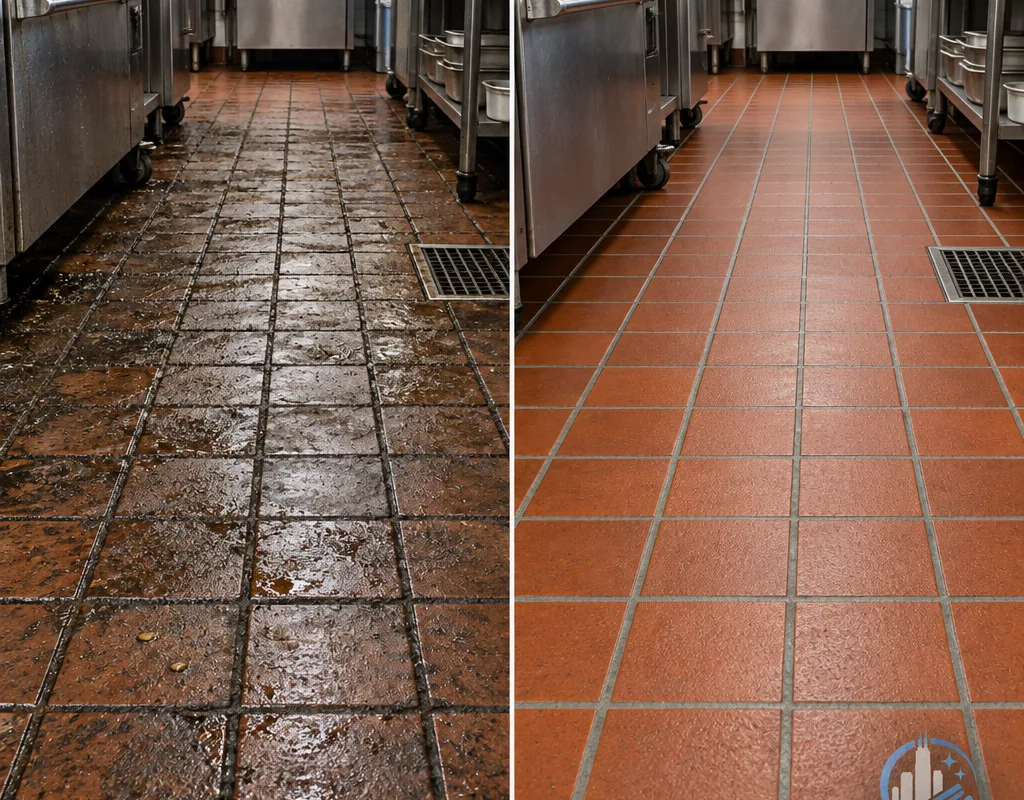
Before-and-after view of greasy quarry tile and grout beside the cleaned and extracted floor
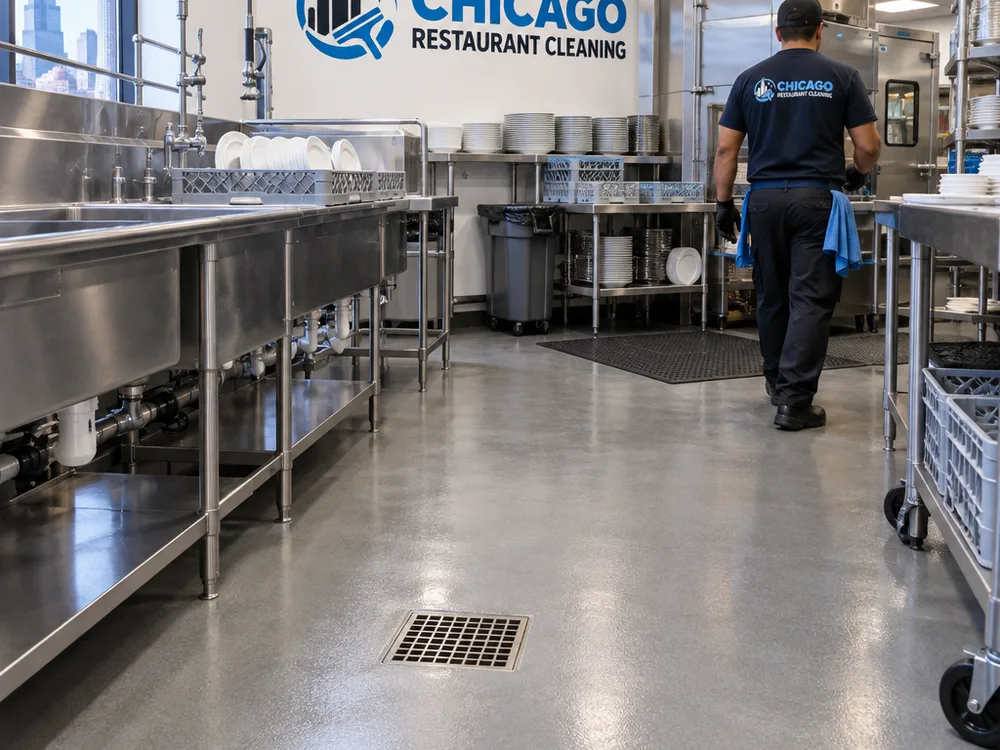
Clean restaurant dish-area floor with a dry walk path and detailed floor drain area
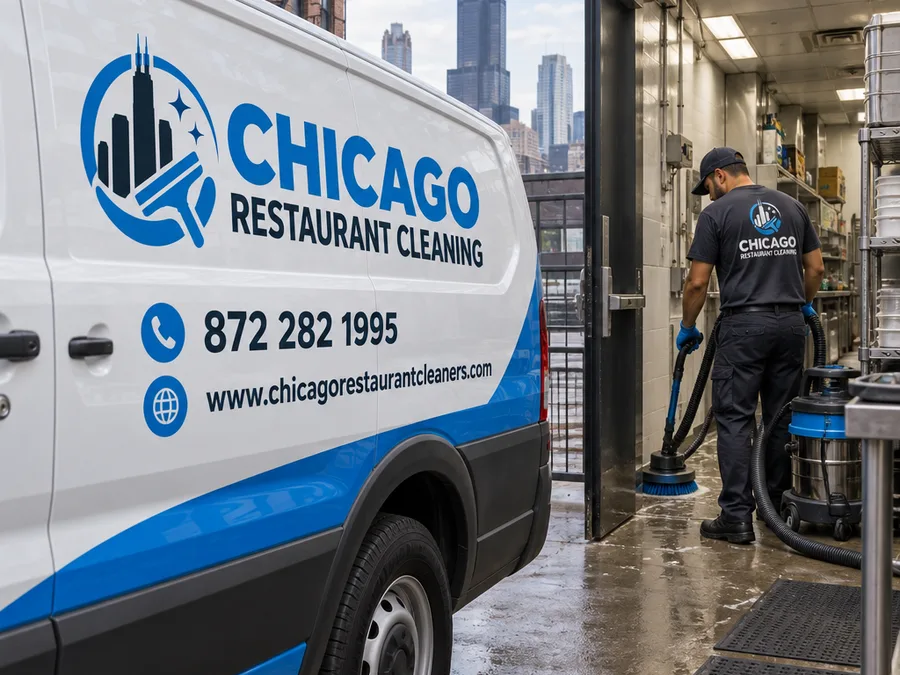
Technician operating a compact scrubber and vacuum recovery tool along base coves in a tight restaurant corridor
Operational answers

Commercial kitchen floor cleaning FAQs

Can you clean quarry tile and grout in an operating restaurant kitchen?

Yes, Commercial Kitchen Floor Cleaning can be scheduled around service so we clean in sections and keep access lanes controlled. Quarry tile responds well to deep degreasing and aggressive brushing, but it also holds soil in texture and grout, so the rinse and recovery step matters as much as scrubbing.

How long does restaurant tile and grout cleaning take?

Most Restaurant Tile Cleaning jobs take a few hours, but time depends on square footage, how heavy the grease is, and how many edges and drains need detail work. A small BOH can often be completed in one visit, while large kitchens or long-neglected grout may require extra passes to rinse clear.

What's the difference between Restaurant Floor Degreasing and normal mopping?

Restaurant Floor Degreasing uses chemistry, dwell time, agitation, and extraction to remove bonded oils from texture and grout, while mopping often spreads diluted grease and leaves a film. If the floor feels sticky shortly after mopping, that is usually residue that needs a deep clean and thorough rinse.

Do you use high-pressure washing inside the kitchen?

It depends on the space and drainage, but many indoor kitchens are better served by controlled scrubbing and hot-water extraction rather than open high-pressure spraying. In tight Chicago BOH layouts, overspray can create slip risk and push contaminated water into corners, coves, and under equipment.

How often should a Chicago restaurant schedule deep floor cleaning?

Many restaurants schedule Restaurant Floor Cleaning Chicago on a monthly or quarterly cadence, then adjust based on fryer volume, traffic, and how quickly grout darkens again. Kitchens with heavy fry and sauté work, or constant dish traffic, usually need more frequent Kitchen Floor Degreasing to keep traction consistent.

What do you need from us before the crew arrives?

We typically need clear access to the floor, a water source, and a plan for any equipment that cannot be moved. If there are sensitive areas, such as electrical panels, floor outlets, or storage that must stay dry, point them out during the walk-through so the crew can set boundaries and still clean the high-risk lanes.

Plan your floor cleaning

Get a written scope for your kitchen floor clean

Tell us your kitchen layout, floor type, and preferred service window. We'll confirm what's included for tile, grout, and degreasing, then schedule a plan that fits your prep and service hours.