
Line and cook stations
Degrease exterior surfaces, backsplashes, equipment sides, fryer areas, and floor edges where oil migrates. Detail around legs, casters, and under-shelf supports where mops miss.
Bring your back-of-house up to a clean, inspection-ready standard with a detailed reset of grease, carbon, food soils, and high dust across the line, prep areas, and storage.
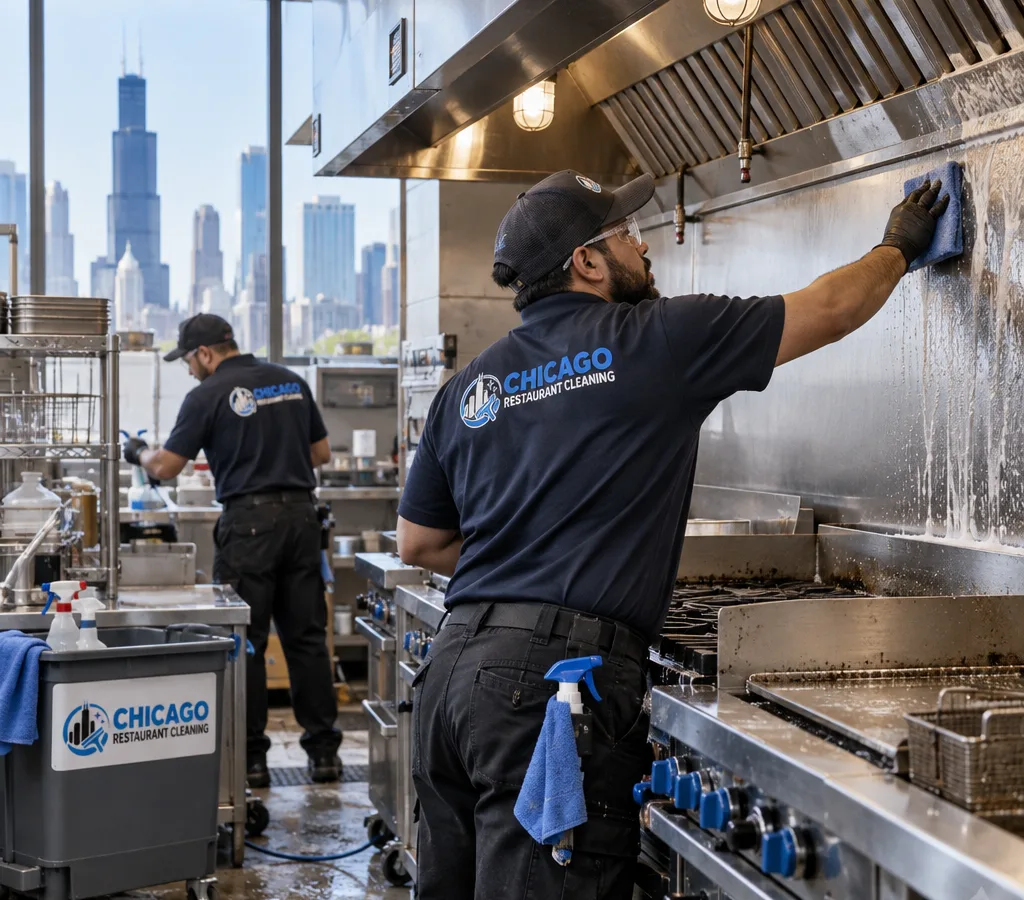
Kitchen Deep Cleaning is the difference between a surface wipe-down and a true back-of-house reset. Chicago Restaurant Cleaning focuses on the places that quietly collect grease and soil over weeks of service: behind and under cooking equipment, along coved base, on wall splatter zones, inside coolers, on shelving, and up high where dust and cooking vapor settle.
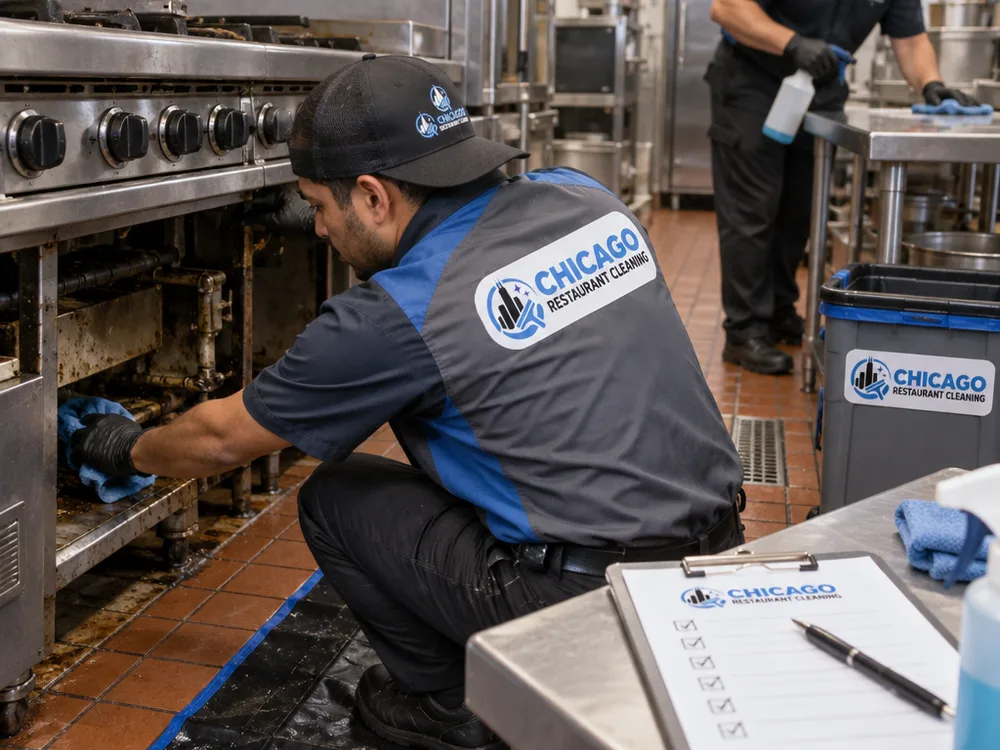
Because most Chicago restaurants run tight prep windows, we scope the work so it fits your hours and your kitchen layout. Our team works with a written checklist, clear access needs—what gets pulled and what stays put—and a plan for protecting food-contact areas while we clean.
A deep clean is typically scheduled as a periodic detailed project, then maintained with routine restaurant cleaning service so you do not have to keep starting from zero.
Degrease exterior surfaces, backsplashes, equipment sides, fryer areas, and floor edges where oil migrates. Detail around legs, casters, and under-shelf supports where mops miss.
Remove splash and hand soil on FRP, tile, painted surfaces as appropriate, door handles, push plates, and service doors leading to dish and storage.
Scrub and rinse heavy soil buildup along base, corners, and under equipment footprints. We focus on slip-prone zones near fryers and dish, and address drain covers and surrounding grout lines where allowed.
Detail wire racks, dunnage racks, speed racks, and dry storage shelving, including the undersides and wall contact points where dust and residue collect.
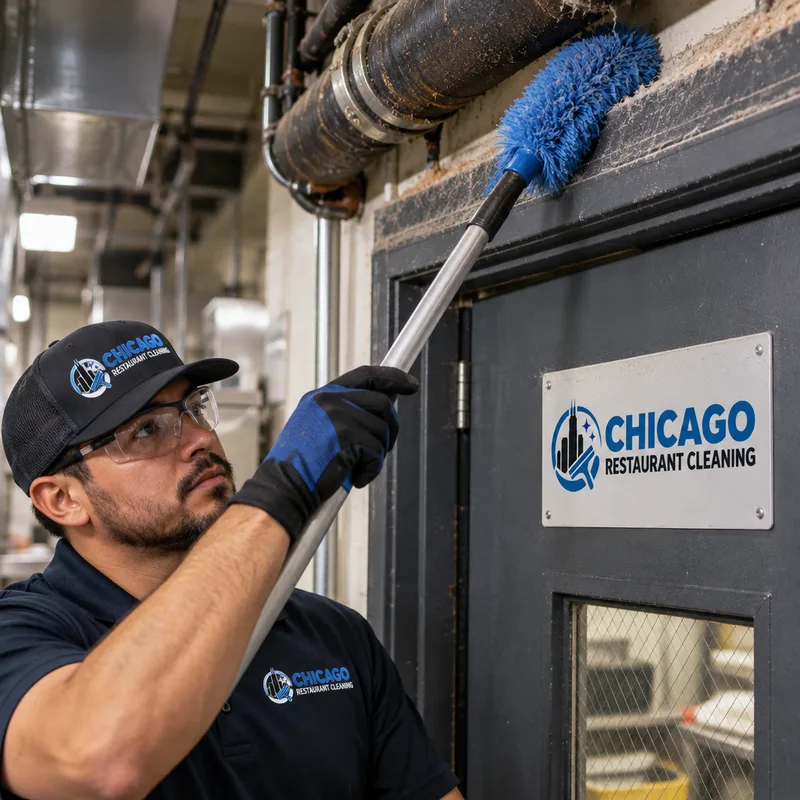
Remove dust and greasy film from reachable high ledges, pipe runs, door tops, and exposed framework. High dusting reduces the chance of debris dropping onto work surfaces during prep.
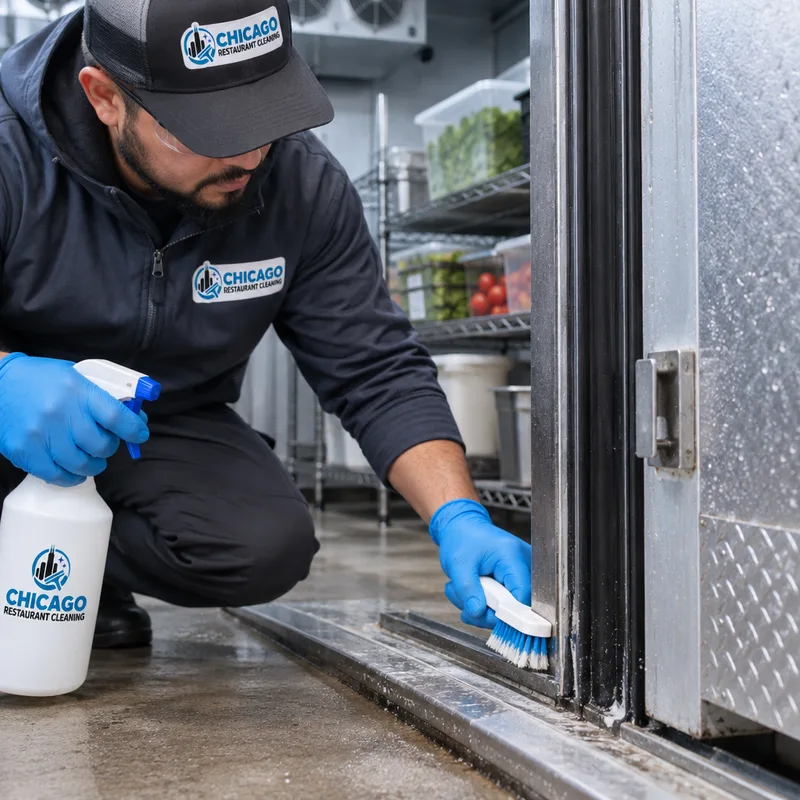
Clean floors, thresholds, kick plates, shelving, and door gaskets where accessible with food-safe methods and careful moisture control to help prevent ice buildup and odors.
A deep clean in an operating restaurant has two rules: protect food-contact areas and keep the kitchen functional when you reopen. Our restaurant deep cleaners start by confirming what must be covered, removed, or relocated, including smallwares, ingredient bins, paper goods, and packaged product. We stage tools and chemicals so nothing is set on prep tables or cutting surfaces.
We work in zones so the team is not tripping over itself in tight Chicago layouts, especially in older buildings where back-of-house corridors and basements can be narrow. If your kitchen is in Wicker Park or West Town, space constraints and shared building hallways often drive the staging plan. In River North, late-night service schedules and deliveries can make off-hours work the cleanest option.
You will get a clear scope up front, including what we are cleaning, what we are not touching—for example, internal mechanical components—and what access you need to provide for the best result.
Step 1 of 4
We confirm the kitchen zones, priority problem areas, access constraints, and the best time window. You will know what is included before work starts.
Step 2 of 4
We cover or clear food-contact areas, stage wet-floor signage, and set a safe path for moving equipment. If a walk-in is included, we plan for product relocation and temperature protection.
Step 3 of 4
We degrease, scrub, and rinse as appropriate from higher surfaces down to floors, focusing on buildup points: behind equipment, corners, base edges, thresholds, and shelving.
Step 4 of 4
We do a final pass against the checklist, verify floors are safe for staff traffic, and review any access issues we found so your team can maintain results between deep cleans.
Some kitchens schedule deep cleaning right alongside service for grease interceptors because the mess tends to travel: splash, drips, and tracked residue around the trap area can contaminate nearby floors and wall bases. If your kitchen needs restaurant grease trap cleaning in Chicago, we can clean and sanitize the surrounding area after the pump-out so odors and residue do not linger.
Because interceptors vary by building and lease responsibilities, we confirm access, containment needs, and where waste handling is managed. We will never guess on disposal requirements. If the trap is in a basement utility room or a shared service corridor, we plan for floor protection and a controlled path for equipment so grease does not get spread through the building.
This approach fits restaurants in dense corridors like the West Loop, where loading access and shared alleys can make timing and staging just as important as the cleaning itself.
Kitchen deep cleaning in Chicago typically ranges from $450 to $2,500+ depending on kitchen size, buildup, and how much equipment must be pulled out and detailed. A small prep kitchen or single-line reset often lands around $450 to $900, while larger kitchens with heavy grease, multiple stations, and walk-in cooler cleaning can run $1,200 to $2,500+.
Price changes with hours available to work, soil level—oil and carbon take longer—access such as tight basements, stairs, and limited parking, and add-ons like high dusting or grease trap area sanitation. The exact cost is confirmed after an on-site walk-through and written scope.
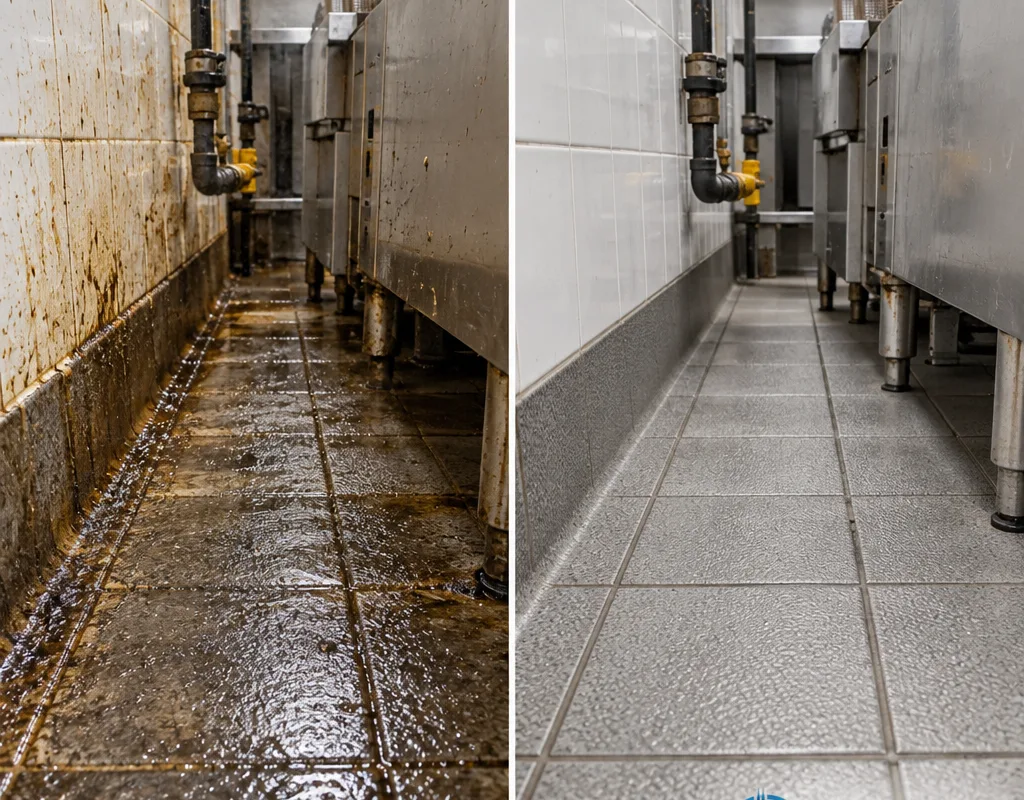
Most restaurant deep cleaning jobs take 4 to 12 hours depending on square footage, grease buildup, and whether equipment must be moved. A compact line and prep area can sometimes be completed in a single off-hours shift, while larger kitchens with walk-ins and heavy detailing may need a split schedule to keep operations moving.
Yes, when access is safe and approved, we pull out movable equipment to clean behind and underneath where grease and food debris collect. For hard-plumbed or hardwired equipment, we clean to the safe access limits and document what would require a technician disconnect to reach fully.
Yes, walk-in cooler cleaning uses food-safe methods with controlled moisture so you do not end up with standing water, ice, or chemical odor. We coordinate product relocation, keep doors closed as much as possible to protect temperature, and focus on floors, shelving, thresholds, and gasket areas where mold and residue can build.
Often, yes, but it depends on where the dusting is needed and what is directly below. High dusting is scheduled when prep tables and open product can be covered or cleared, and we work top-down so nothing falls onto cleaned surfaces.
Professional restaurant deep cleaning targets buildup points routine cleaning rarely reaches: behind equipment, wall splatter zones, shelving undersides, door tops, high ledges, and floor edges along base. Routine cleaning usually keeps visible surfaces and floors serviceable day to day, while a deep clean resets hidden grease and soil that can impact safety and inspections.
We can clean and sanitize the grease trap area after a pump-out when the interceptor is accessible and the handling is coordinated with the pumping service. That usually includes the surrounding floor, wall base, and any tracked residue along the path so the area is not left slippery or odorous.
Tell us your hours, kitchen layout, and what is giving you trouble—grease behind the line, walk-in odors, high dust, or floor edges. Chicago Restaurant Cleaning will recommend a practical plan and schedule for restaurant deep cleaning in Chicago, with clear inclusions and access needs before work begins.